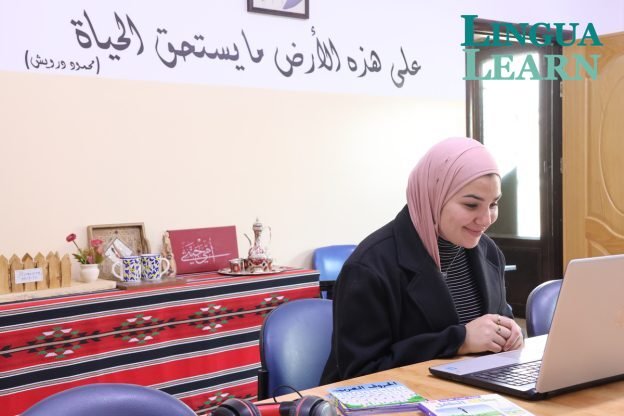
Arabic looks like a wall of curves on first contact, and that puts some beginners off before they begin. The language has a clear logic once you see how it is put together. This guide to the Arabic language for beginners lays out five steps in the order that saves the most time.
Arabic comes in two layers. Modern Standard Arabic (MSA) is the written and formal form, used in news, books and speeches across the Arab world.
Daily speech happens in dialects such as Egyptian, Levantine, Gulf or Maghrebi, which can differ a lot from each other and from MSA.
If you want to read and follow formal media, start with MSA. If you want to chat with people in one country, pair MSA basics with that country’s dialect. Pick one main path first.
Arabic has 28 letters and is written from right to left. Most letters change shape depending on whether they sit at the start, middle or end of a word, or stand alone.
Short vowels are usually left unwritten, so reading also means recognizing whole words. A few weeks of daily practice usually covers the letters themselves.
Some sounds have no match in many other languages, such as ع (ayn) and ح. Listening to a teacher and repeating out loud matters more here than almost anywhere else.
Most Arabic words grow from a root, usually made of three consonants. The root k-t-b points to writing: kitab means book, and maktab means office. Spotting roots helps you guess meanings and remember words in families. Start noticing them early. You do not have to master the system on day one.
Say greetings and introductions from the first day, even before the alphabet feels solid. A teacher who corrects your pronunciation early, as in live Arabic classes, saves you from habits that are hard to undo.
Arabic rewards patience. Take the five steps in order, and the first months feel a lot less crowded.
See also: Best Way to Learn German as a Beginner: Where to Start
Ready for step one with a teacher? The Arabic A1.1 beginner course is a live online group class taught by native instructors and built on the CEFR scale.
Not sure whether Modern Standard Arabic or a dialect fits your goals? Talk to the team before you enroll and ask what the course focuses on.
 EN
 HY